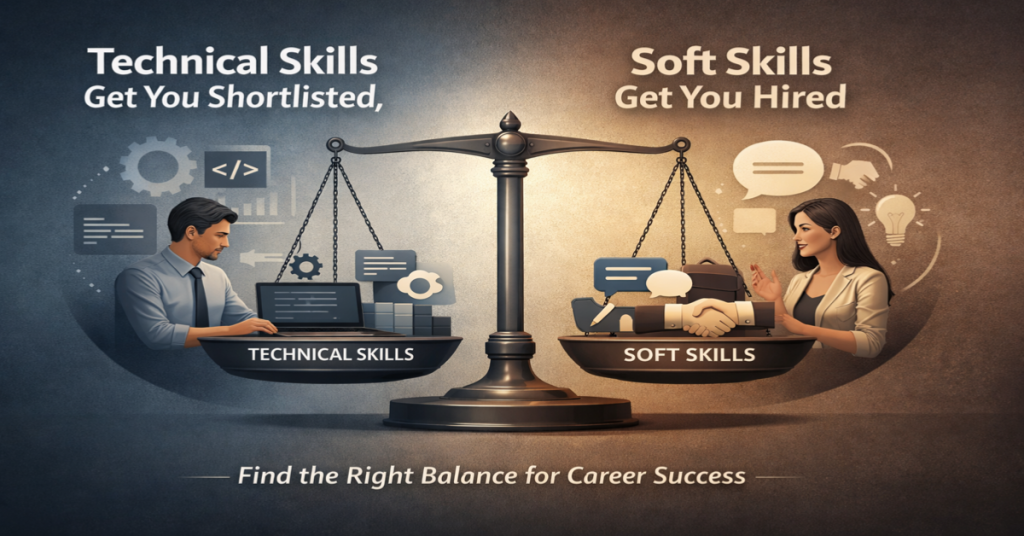
In today’s competitive job market, having strong technical skills is no longer enough. Many candidates have the right degrees, certifications, and hands-on experience. Yet, only a few move ahead in interviews and land the job. The difference often comes down to something many professionals underestimate – soft skills.
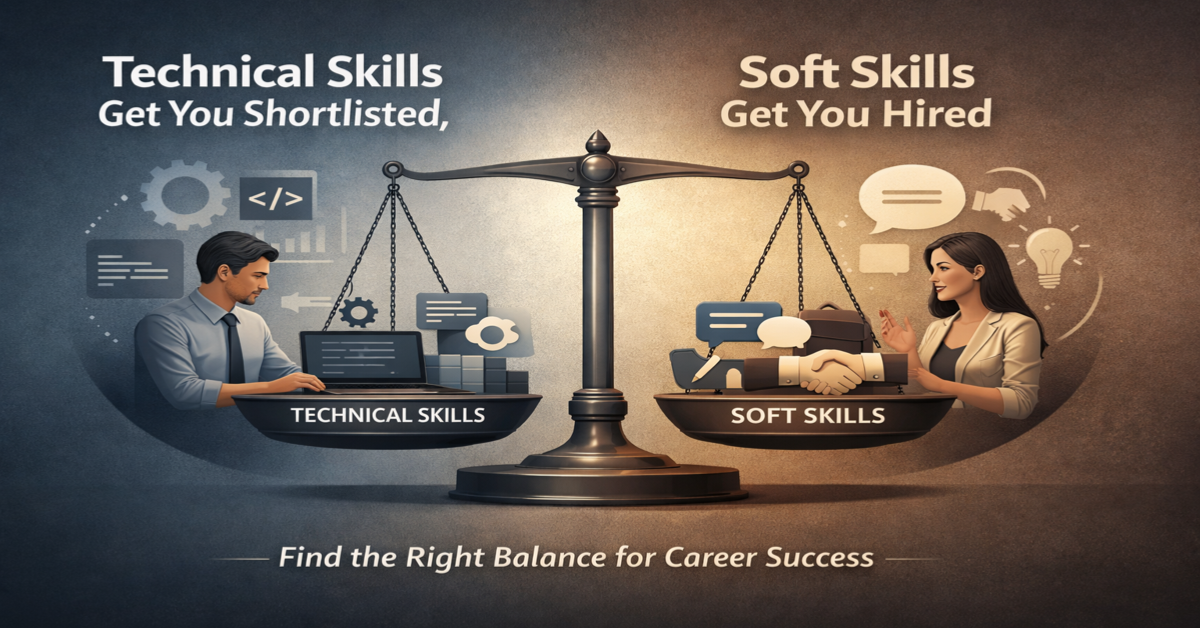
Technical knowledge may get your resume noticed, but soft skills play a major role in helping you secure the role. Employers today are looking for professionals who not only understand technology but can also communicate, collaborate, and adapt in fast-changing work environments. Understanding the balance between technical skills and soft skills can significantly improve your chances of getting hired.
Why Technical Skills Help You Get Noticed
Technical skills are the foundation of any profession, especially in the IT and technology industry. These include coding languages, data analysis, cloud computing, cybersecurity knowledge, and other role-specific abilities. Recruiters often begin the hiring process by filtering resumes based on these qualifications.
For example, a company hiring a software developer will look for experience in programming languages such as Python, Java, or JavaScript. Similarly, a data analyst role may require knowledge of tools like SQL, Excel, or Power BI. These skills help recruiters quickly identify candidates who meet the basic requirements of the job.
However, this is where many candidates misunderstand the hiring process. Technical skills can help you get shortlisted, but they do not guarantee that you will be selected. When multiple candidates have similar technical expertise, recruiters start evaluating other qualities that indicate how well a person will perform in the workplace.
The Real Difference Maker: Soft Skills
Soft skills refer to personal qualities and behavioral traits that influence how you interact with others and handle work situations. Skills such as communication, teamwork, adaptability, problem-solving, and emotional intelligence are becoming increasingly important in modern workplaces.
Imagine two candidates with similar technical experience applying for the same role. During the interview, one candidate explains their projects clearly, listens carefully, and responds thoughtfully. The other candidate struggles to communicate ideas or collaborate effectively. Most employers will naturally choose the first candidate because technical work rarely happens in isolation.
Companies today value professionals who can work well with teams, share ideas clearly, and handle challenges with a positive mindset. In many organizations, projects involve multiple departments, remote teams, and constant communication. Strong soft skills make it easier for employees to work in such environments and contribute to business growth.
Why Employers Prioritize Soft Skills Today
The workplace has evolved significantly in the last few years. Remote work, global teams, and rapid technological changes have made human skills more important than ever. While technical skills can be learned through training or courses, soft skills are often developed through experience and self-awareness.
Employers know that technology will continue to change. Programming languages and tools that are popular today may evolve tomorrow. However, qualities like adaptability, leadership, and communication remain valuable across roles and industries.
For example, a developer who can explain technical concepts to non-technical teams becomes an important bridge between departments. Similarly, a professional who can manage stress, handle feedback, and collaborate with colleagues contributes to a healthier work culture. These factors influence hiring decisions more than many candidates realize.
How Job Seekers Can Strengthen Their Soft Skills
Many job seekers focus heavily on improving technical knowledge but overlook the importance of developing interpersonal skills. The good news is that soft skills can also be improved with practice and awareness.
Simple habits such as active listening, participating in discussions, presenting your ideas clearly, and being open to feedback can make a big difference. Networking, group projects, and collaborative work experiences also help build confidence and communication abilities.
During interviews, employers often observe how candidates think, respond to challenges, and interact with the interviewer. Showing curiosity, clarity in communication, and a positive attitude can create a strong impression. In many cases, these qualities influence the final hiring decision more than technical answers alone.
Building a Balanced Skill Set for Career Growth
The most successful professionals understand that career growth depends on a combination of both technical expertise and strong soft skills. Technical knowledge proves that you can perform the job, while soft skills show that you can work effectively within a team and contribute to long-term success.
For job seekers, this means focusing not only on learning new technologies but also on improving communication, adaptability, and problem-solving abilities. When both skill sets work together, candidates stand out in interviews and become valuable assets to any organization.
At Outworks Solutions, we regularly see how this balance shapes successful careers. Companies are not just looking for skilled professionals; they are looking for individuals who can collaborate, communicate, and grow with their teams. For job seekers preparing for their next opportunity, developing both technical and soft skills could be the key step that turns a shortlist into a job offer.