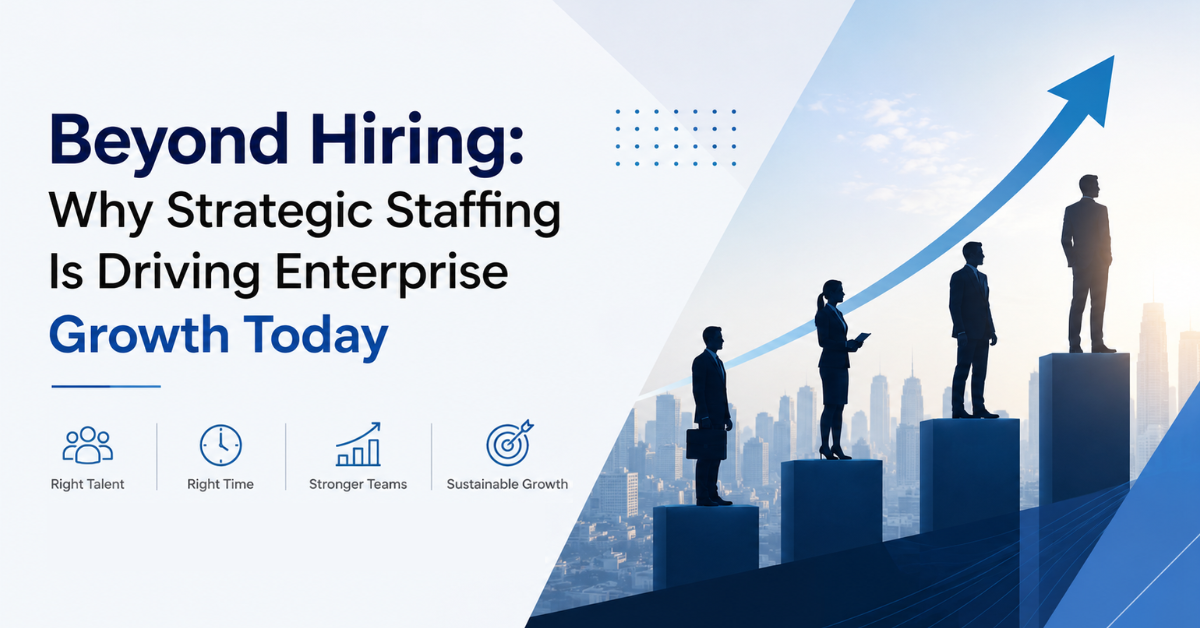
In today’s fast-changing business world, hiring is no longer just about filling empty seats. Companies are growing faster, technology is evolving constantly, and customer expectations are changing every day. Because of this, enterprises are now looking beyond traditional recruitment and focusing more on strategic staffing.
Strategic staffing is not simply about hiring more employees. It is about finding the right talent at the right time to support business goals, improve productivity, and help organizations scale efficiently. Whether it is IT staffing, project-based hiring, or workforce planning, businesses today need smarter hiring strategies to stay competitive.
The Shift from Traditional Hiring to Strategic Staffing
Earlier, recruitment was mostly reactive. A company would start hiring only when someone resigned or when a new project arrived. But today, enterprises cannot afford delays in hiring. A slow recruitment process can affect productivity, project delivery, customer satisfaction, and even revenue growth.
This is where strategic staffing becomes important. Instead of hiring only when there is an urgent requirement, businesses now plan their workforce according to future growth, upcoming projects, and market demands. Companies are building talent pipelines, working with staffing partners, and using flexible hiring models to stay prepared.
This shift is especially visible in industries like IT, healthcare, manufacturing, and logistics, where skilled talent is highly competitive and project timelines are tight.
Why Enterprises Are Focusing on Strategic Staffing
One of the biggest reasons enterprises are investing in strategic staffing is speed. Hiring the right candidate quickly can make a huge difference in business performance. Delayed hiring often means delayed projects and increased workload for existing teams.
Strategic staffing also helps companies access specialized talent more easily. Many projects today require niche technical skills, and finding those professionals through traditional hiring methods can take months. Staffing solutions help businesses connect with skilled professionals faster and more efficiently.
Another major advantage is workforce flexibility. Business needs are no longer constant throughout the year. Some companies need large teams during expansion phases, while others require temporary experts for short-term projects. Strategic staffing allows enterprises to scale teams based on current requirements without creating unnecessary long-term costs.
Enterprises are also realizing that employee quality matters more than quantity. Hiring ten employees without the right skills may not deliver the same results as hiring three highly skilled professionals who fit the company’s goals perfectly. This is why talent acquisition today is becoming more strategic and business-focused.
Strategic Staffing Supports Business Growth
Enterprise growth depends heavily on people. Even the best business plans cannot succeed without the right workforce behind them. Strategic staffing helps businesses build strong teams that support innovation, efficiency, and long-term growth.
For example, when companies enter new markets or launch new services, they often need professionals with specific expertise. A strategic staffing partner can help businesses identify and onboard the right talent quickly, reducing operational delays and improving execution.
Strategic staffing also improves workforce planning. Instead of rushing during urgent hiring situations, enterprises can prepare in advance and make smarter recruitment decisions. This reduces employee turnover, improves productivity, and creates a more stable work environment.
In many organizations, HR teams are now working closely with business leaders to align hiring strategies with company goals. Recruitment is no longer treated as a separate process. It has become a key part of overall business strategy.
The Growing Importance of Staffing Partners
As hiring challenges continue to increase, many enterprises are choosing staffing partners who understand industry demands and talent trends. A reliable staffing partner does more than just share resumes. They help companies identify the right candidates, reduce hiring time, and improve workforce efficiency.
This is particularly important in the IT industry, where technologies change rapidly and skilled professionals are in high demand. Businesses need staffing solutions that are flexible, fast, and aligned with modern workforce expectations.
Companies that adopt strategic staffing are often better prepared for growth, market changes, and digital transformation. They can adapt faster, build stronger teams, and stay ahead of competitors.
Conclusion
The role of hiring has changed significantly over the years. Today, enterprises are no longer focused only on increasing headcount. They are focusing on building agile, skilled, and future-ready teams that can drive real business growth.
Strategic staffing is helping organizations move beyond traditional recruitment and create smarter workforce strategies. In a competitive business environment, the companies that hire strategically today are the ones most likely to lead tomorrow.
For enterprises looking to grow sustainably, strategic staffing is no longer optional – it is becoming essential.